Colour coding in commercial cleaning plays an important role in preventing cross-contamination and maintaining hygiene standards. It’s a simple system, but one that helps cleaning teams work safely and consistently across different environments.
What is colour coding in cleaning?
Have you ever wondered why professional cleaners carry different coloured cloths, mop heads and cleaning equipment?
It’s all about keeping cleaning equipment separate and reducing the risk of germs and bacteria being transferred from one area to another.
You wouldn’t want the cloth used to wipe down a washroom sink being used on a kitchen worktop, or the mop that cleaned around the urinals being used on the classroom floor where children play.
That’s where colour coding comes in.
Each colour is assigned to a particular area of a building, making it easy for cleaners to identify which equipment should be used where. This helps prevent equipment from being accidentally used in the wrong areas and provides a consistent approach to cleaning.
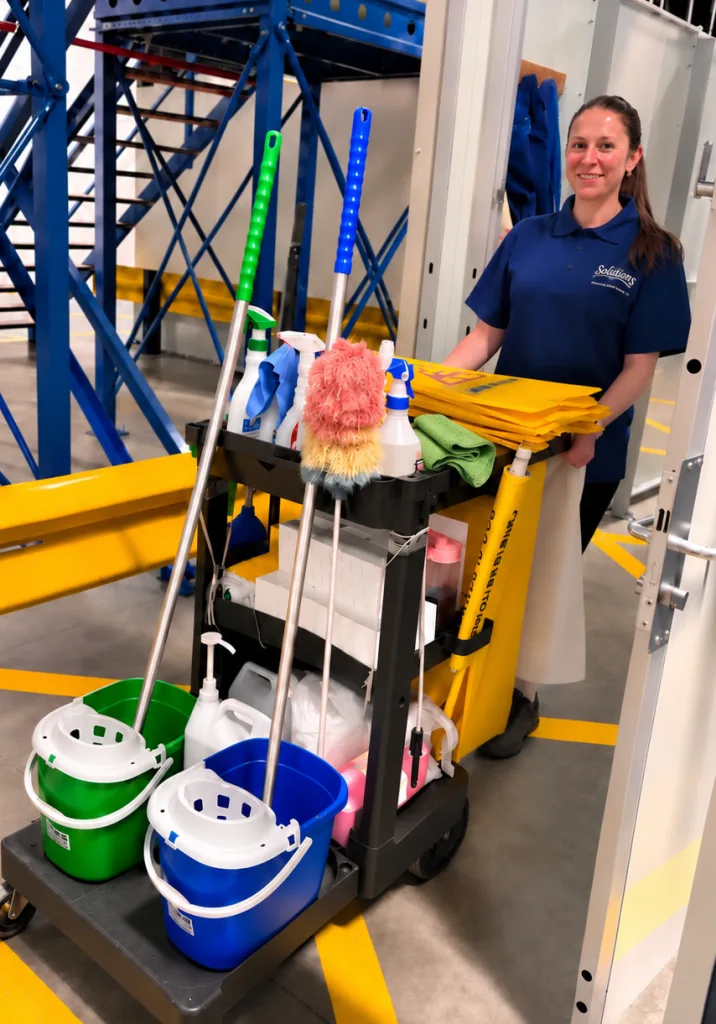
How does colour coding help prevent cross-contamination?
Cross-contamination happens when germs, bacteria or other contaminants are transferred from one surface or area to another.
Cleaning equipment can easily contribute to this. A cloth might look perfectly clean but still carry microorganisms picked up from a previous surface. By using separate, colour-coded equipment for different areas, cleaners can reduce the risk of these contaminants being spread around a building.
Of course, colour coding alone isn’t enough. Cleaners also need to change cloths when necessary, wash reusable equipment correctly and follow the right cleaning procedures.
After all, having four different coloured cloths doesn’t help much if they’re all used in the wrong places!
What do the different colours mean?
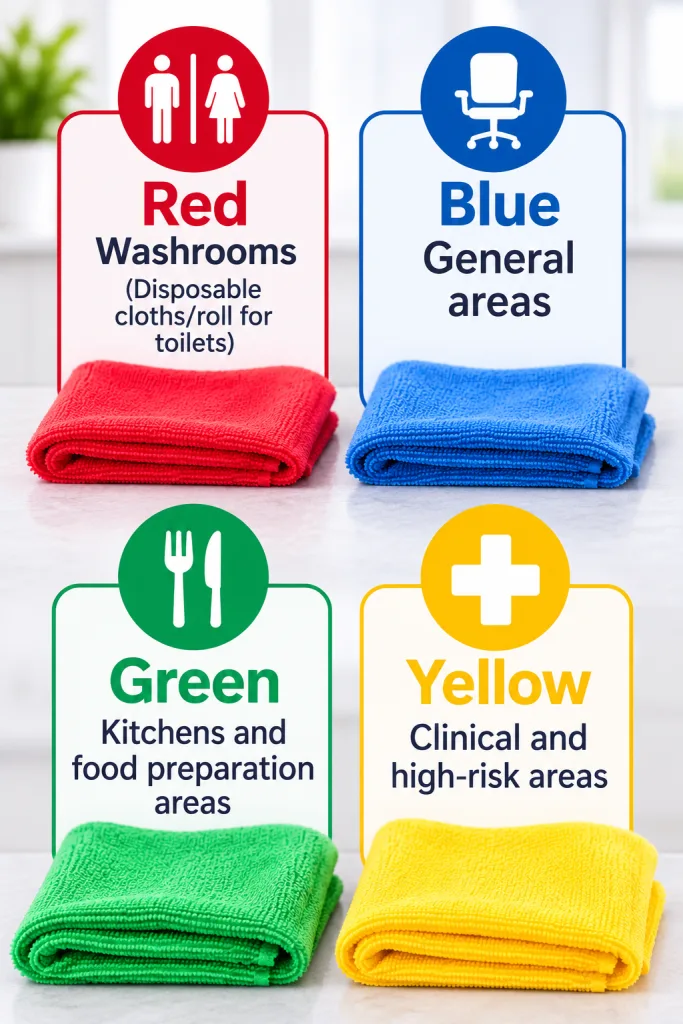
With the exception of the healthcare sector, there are no nationally or internationally compulsory colour-coding standards for the cleaning industry. However, the British Institute of Cleaning Science (BICSc) provides a recommended industry-standard colour-coding system, which helps cleaning businesses maintain consistent hygiene practices and reduce the risk of cross-contamination
Red – Washrooms (Disposable cloths/roll for toilets)
Blue – General areas
Green – Kitchens and food preparation areas
Yellow – Clinical and high-risk areas
Each colour has a specific job, making it easier for cleaners to identify the correct equipment before they start.
It’s worth remembering that some environments can have additional requirements. Healthcare premises, for example, need to follow the relevant NHS cleaning standards.
For most commercial premises, following the recognised system provides a clear and practical way to manage cleaning equipment safely.
Why consistency matters across different cleaning sites
At Solutions Services, we follow the BICS-recommended colour-coding system across all our commercial cleaning sites.
Keeping the same system across every site is important. Whatever building our cleaners work on whether it’s a school, office or warehouse, the colours mean the same thing.
This removes guesswork and helps our teams move between different premises without having to learn a different system each time. It also makes covering another cleaner’s shift much easier. Team members can recognise the equipment straight away and confidently know which areas they should use it in, removing the risk of accidental cross-contamination.
Consistency helps everyone follow the same cleaning procedures, wherever they’re working.
Good cleaning is about the details
Colour coding might seem like a small part of commercial cleaning, but it shows why having the right systems and training matters.
Professional cleaning isn’t simply about making a workplace look tidy. It’s about understanding how to clean different environments properly, using the correct equipment and following procedures that help protect the people who use those spaces.
At Solutions Services, we believe consistency matters. From the equipment our teams use to the standards they follow, we want our clients to know they’re getting a professional and reliable cleaning service.